Areas of focus
Areas of focus
You don't need a diagnosis, a label, or a tidy explanation to start.
Most of what I work with overlaps. These aren't three separate doors, just different places people tend to start.
The things that bring us to therapy rarely exist in isolation. Neurodivergence can affect relationships, regulation, burnout, self-worth, and the way you understand yourself. Trauma and attachment can shape what feels safe, how you communicate, and what happens when you feel hurt or disconnected. Anxiety can become tangled up with perfectionism, people-pleasing, or the pressure to keep everything under control.
I'm interested in how those pieces fit together, not in reducing you to whichever one brought you through the door.
Neurodivergence & Self-Understanding
What is neurodivergence?
You don't have to know this word, use it for yourself, or have a diagnosis for this section to apply to you.
Neurodivergence is a broad way of describing brains that experience, process, or respond to the world differently from what is considered typical. ADHD and autism are two familiar examples.
Sometimes the experiences are easier to recognize than the label: feeling overwhelmed by things other people seem to tolerate easily, struggling to start or organize something you genuinely care about, needing more recovery time, feeling misunderstood, masking parts of yourself, or wondering why everyday life seems to require so much effort.
A lot of neurodivergent people come to therapy after years of wondering why things seem to take more effort for them than they do for everyone else. You may have spent a long time pushing through overwhelm, trying harder, masking, overexplaining yourself, or assuming you were somehow doing something wrong.
I don't see ADHD or autism as problems to be corrected. The work is about understanding how your brain works, what your system needs, and separating your actual differences from the shame and expectations that may have accumulated around them.
The goal isn't to become more like everyone else. It's to understand yourself well enough to grow in ways that actually fit you.
ADHD · Autism · late diagnosis & self-discovery · masking · burnout · sensory overwhelm · executive functioning · shame · feeling different or misunderstood
Anxiety & Trauma
Sometimes our reactions feel bigger than the moment in front of us.
Sometimes you know a reaction is bigger than what just happened, but knowing that doesn't make it easier to stop. Anxiety, perfectionism, people-pleasing, self-criticism, or feeling constantly on edge often make more sense when we understand what your system has learned to anticipate, protect against, or control.
When you understand why something happens, there is often more room for compassion, less shame, and more choice in what happens next.
Understanding why something makes sense doesn't mean you have to stay stuck in it.
We can slow those patterns down and get curious about what's underneath them without turning everything into a problem from your past. Understanding where something came from isn't about blaming the past or excusing behavior that causes harm. It's about making your reactions less mysterious.
anxiety · perfectionism · attachment wounds · people-pleasing · boundaries · self-worth · self-criticism · emotional overwhelm · life transitions
Relationships & Connection
You don't have to be in crisis to come to couples therapy. You might keep having the same argument, feel like you're speaking different languages, want more intimacy or connection, or simply want to understand each other better before resentment and distance have a chance to grow.
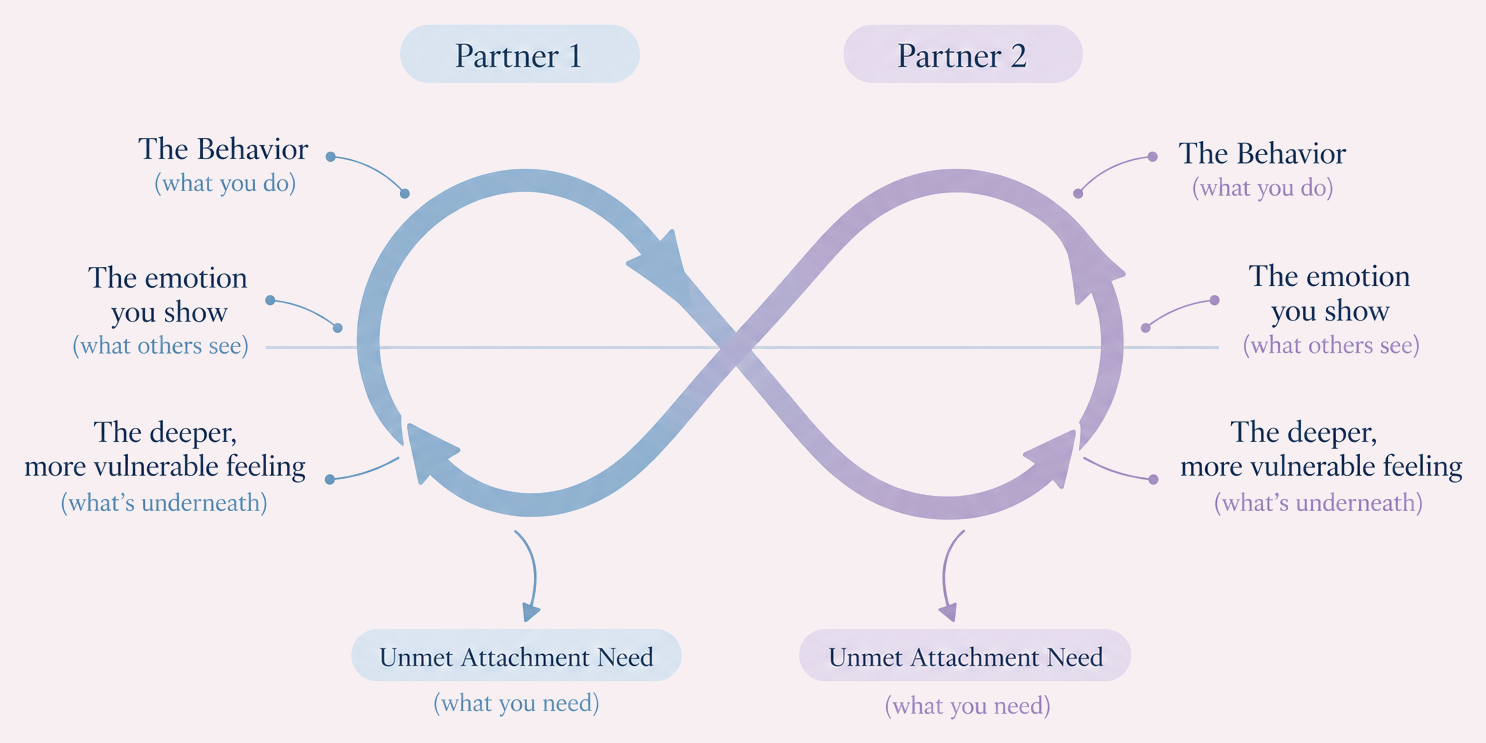
I work with couples to slow down what happens between them and look beneath the content of the argument. Often, the dishes, the unanswered text, or the change in tone isn't really the whole story. We look at what each person is experiencing underneath, what happens when connection feels threatened, and how the ways you each try to protect yourselves can accidentally keep the pattern going.
You and your partner aren't the problem. The cycle you're stuck in is. The goal is to understand it and learn how to face it together.
This can be especially important in mixed-neurotype relationships, where genuine differences in communication, processing, regulation, or sensory needs can easily be interpreted as a lack of care.
See what I mean by “the cycle”
recurring conflict · communication differences · mixed-neurotype relationships · intimacy · premarital work · disconnection · attachment patterns · family dynamics
Don't see your experience here?
This isn't an exhaustive list. If something you're carrying isn't named here, you're still welcome to reach out. We can figure out together whether I might be the right fit.
Get in touch