About me
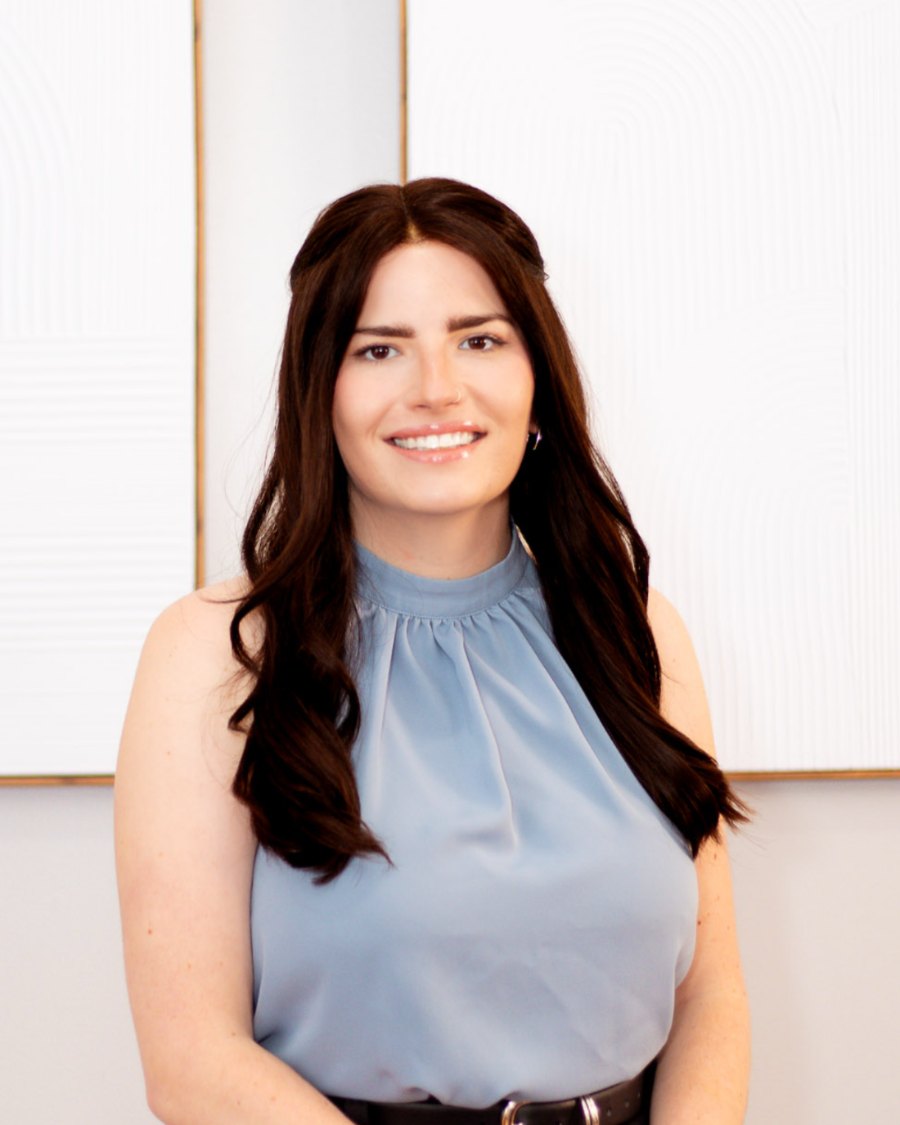
Hi, I'm Hannah
I'm an associate marriage and family therapist, and I'm also neurodivergent. I've spent much of my own life trying to better understand myself and wishing I felt more understood by the people around me. It's one of the reasons I care so deeply about creating a therapy space rooted in curiosity, context, and feeling genuinely seen.
My story
I'll never forget walking into my second-grade classroom on the first day of school and thinking to myself, There is something wrong with me, and everyone else knows it, but no one is going to tell me.
I had always felt different. I had a bathroom buddy because the toilet was too loud when it flushed and would cause me to panic. I needed to smell everything, but some smells felt physically painful to me. Dogs barking and clinking plates hurt my eyes and made me want to cry. Touch felt confusing.
And while I always had friends and was considered emotionally intelligent, that feeling of being different persisted.
Then I found science and fell in love with it. It felt like discovering a hidden blueprint to the world, a way of understanding things that had never made sense to me before. The more I learned, the more I wanted to know, and medicine became the place where all of that curiosity seemed to lead. I decided I wanted to become a doctor and poured everything I had into getting there.
In college, I found myself working longer and harder than many of my peers just to pass some of my courses. Some things weren't clicking, and I couldn't figure out why. No matter how hard I tried, I felt behind, like I was missing something everyone else seemed to have figured out.
More than anything, I wanted to understand why things felt so hard. Without an explanation, I assumed I just wasn't trying hard enough, wasn't smart enough, or was somehow doing it wrong.
When I was diagnosed with ADHD, it was a huge relief to finally have an explanation for some of what I had been experiencing. But it didn't answer everything. Even with that new understanding, there were still pieces that didn't quite make sense.
At the same time, I found myself increasingly drawn to philosophy and the mind, especially the intersection of the two. That interest eventually led me to a study abroad program in Budapest, Hungary, where I studied cognitive science, a multidisciplinary approach to understanding the mind. It was the first time I'd been taught to look at how all the pieces of a person fit together, rather than one piece in isolation.
I came back still planning on medical school, but with a way of thinking that would stay with me long after.
Soon after graduation, my medical school plans got pushed back by life, and in the meantime I spent a few years working in research and clinical labs. After a while, a question started creeping in: Was medical school still my dream, or had I spent so long moving through life with blinders on, focused on what I thought I should be doing, that I'd stopped knowing how to listen to myself?
I had spent years pushing toward a life I had chosen when I was much younger. So I stepped back and asked what I actually valued now. Instead of looking at what I had to push for, I started noticing what came naturally, the roles I kept falling into without meaning to, and the moments I felt most like myself.
The moments that felt most meaningful were always the ones where I could simply be there for someone, listen closely, and help them feel understood in whatever they were facing.
At 29, I went back to graduate school to pursue my master's in marriage and family therapy, a field I had never even heard of before. But when I learned that MFT looks at people in context rather than trying to understand them in isolation, something clicked. It fit the way of thinking I had found in Budapest: looking not just at the whole person, but at the relationships, experiences, and systems that have shaped them.
When I began seeing clients, I was surprised by how much I loved working with so many different kinds of people. But I found myself especially drawn to clients who felt different, unseen, or misunderstood. People carrying a lot of shame, often feeling alone in experiences they didn't yet have the words to describe.
I think I was drawn to them because I knew that feeling so well.
When I finally found someone who made me feel truly seen and understood, something shifted. I didn't have to overexplain myself or hold my breath, hoping they wouldn't say something that left me feeling dismissed or even more misunderstood.
I felt myself begin to let go of an effort I hadn't even realized I was still making. Constantly adapting. Trying. Holding things in. Explaining and translating myself so that I might be understood correctly.
The relief was something I didn't know I needed until I experienced it.
If there is one thing I hope to offer through this work, it's that same kind of space for someone else. A place where you can begin to let go of some of the effort, expectations, and masks you've accumulated around who you think you should be, whether you're aware you're carrying them or not.
That doesn't mean the goal is to stay exactly where you are, or to become more like everyone else. It's to understand yourself well enough that you can grow in ways that actually fit you and make changes without losing yourself in the process.
Maybe that's what I've been looking for since I was eight years old, too: not an answer to what was wrong with me, but a way to understand myself, and someone who gave me the words and the space to do it.
Education & advanced training
Where my work comes from
Education
Master of Marriage & Family Therapy, Lipscomb University
Licensure & supervision
Associate Marriage and Family Therapist, State of Tennessee (AMFT #3050)
Practicing under the clinical supervision of Natalie Hoyt, LMFT #1964, AAMFT Approved Supervisor
Advanced training
Cognitive Processing Therapy Online Training, CPTWeb 2.0, Medical University of South Carolina (2026)
Gottman Method Couples Therapy, Level 1, The Gottman Institute (2025)
Brainspotting, 2-Day Live Webinar with David Grand, PhD, PESI (2025)
Prepare/Enrich Certified Facilitator (2025)
Currently completing
Eye Movement Desensitization and Reprocessing (EMDR) Basic Training
Affiliations
American Association for Marriage and Family Therapy (AAMFT)
AAMFT Neurodiversity Interest Network
Tennessee Association for Marriage and Family Therapy (TNAMFT)
The three who actually run the place
My beloved furless and furry kitties.



Reach out when you're ready
You don't need to have it figured out first, and you don't need the words for it yet.
Get in touch